Excavator bucket adapters fail faster when cracks, distortion, and poor weld quality accumulate. This article explains why welding quality matters, how it affects service life, and what buyers should check in excavator spare parts selection.
Article Outline
- What a bucket adapter does in the tooth system
- Why welding affects lifespan more than many buyers expect
- Common failure modes in heavy-duty service
- Selection and inspection criteria for welded adapters
- Specification comparison and maintenance checklist
- Where buyers can source compatible parts
What a Welded Bucket Adapter Does in Excavator Spare Parts Systems
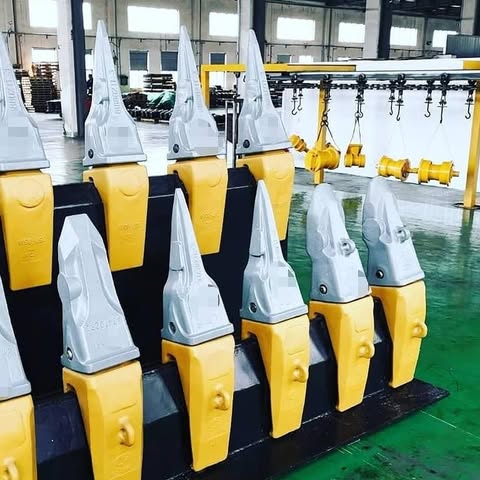
A bucket adapter is the load-transfer base between the bucket lip and the bucket tooth. It must hold alignment, absorb impact, and preserve penetration efficiency in abrasive digging conditions.
In G.E.T. systems, the adapter is not only a connector but also a stress-bearing component. According to OSHA, heavy equipment hazards often increase when components are poorly maintained, which is why wear-part integrity matters in continuous operations.
For buyers comparing excavator spare parts, the adapter should be assessed alongside tooth design, pin retention, and lip condition. If any one part is mismatched, the whole front-end assembly wears faster.
Why Professional Welding Extends Bucket Adapter Lifespan
Professional welding extends service life by preventing crack growth at the highest-stress zones. A properly welded joint distributes load more evenly and reduces the chance of early fracture around the adapter base.
Heat control is critical because excessive thermal input can weaken the heat-affected zone. Industry practice also emphasizes preheating, controlled cooling, and correct filler selection to reduce residual stress, especially on high-abrasion wear parts.
Good welding also restores geometry after localized wear or minor deformation. That matters because a distorted adapter changes tooth alignment, increases uneven impact, and accelerates lip wear. For equipment operators, that can shorten service intervals and raise downtime costs.
In mining and earthmoving, service-life gains are often tied to process discipline rather than material claims alone. According to industry estimates, welded wear components can deliver meaningful lifecycle improvement when crack repair, edge restoration, and inspection are handled consistently.
Common Failure Modes in Welded Bucket Adapters
Cracking, toe failure, and weld porosity are the most common causes of early adapter loss. These defects usually appear first at sharp transitions, overloaded corners, or poorly prepared joint surfaces.
Misalignment is another frequent problem because it creates uneven load paths. When the tooth sits off-center, one side of the adapter takes more impact, and the wear pattern becomes asymmetrical.
In abrasive mining work, the bucket lip can also suffer heat distortion after poor repair welding. That distortion reduces contact quality and makes pin-and-retainer retention less reliable over time.
| Weld Quality Level | Typical Condition | Service Impact |
|---|---|---|
| High | Correct prep, controlled heat, sound bead profile | Better crack resistance and longer usable life |
| Moderate | Acceptable weld, minor finish issues | Normal service life with closer monitoring |
| Poor | Porosity, undercut, distortion, weak fusion | Early failure and higher replacement frequency |
Official welding guidance from the American Welding Society stresses that joint preparation and procedure control are central to sound weld performance. That principle applies directly to adapter repair and fabrication.
How to Evaluate a Welded Bucket Adapter Before Purchase
A welded bucket adapter should be judged by geometry, material traceability, and inspection support. Buyers should confirm that the part matches the machine model, tooth profile, and bucket lip dimensions before installation.
The most important checks are visual weld continuity, dimensional accuracy, and hardness consistency where applicable. If a supplier provides inspection records, they should cover weld appearance, fit-up, and batch identification for traceability.
The ISO 15614-1 welding procedure qualification standard is widely used to validate welding procedures for metallic materials. While specific qualification levels vary by application, the standard shows why documented process control matters.
For procurement teams, the decision should not rely on unit price alone. A cheaper adapter that fails early can increase labor, machine downtime, and bucket lip repair costs.
| Inspection Area | What to Check | Why It Matters |
|---|---|---|
| Fit-up | Interface dimensions, lip contact, tooth alignment | Prevents uneven wear and installation issues |
| Weld condition | Porosity, undercut, fusion, bead consistency | Indicates joint strength and crack resistance |
| Material control | Grade, heat treatment, batch traceability | Supports repeatable performance |
| Retention system | Pin, retainer, locking stability | Reduces loosening under vibration |
Recommended Maintenance Practices for Longer Adapter Life
Routine inspection is the simplest way to extend adapter life after welding. Operators should inspect for cracks, looseness, and lip wear during regular service intervals, especially after hard rock or high-impact work.

Cleaning the area before inspection improves detection accuracy because mud and fines can hide early defects. Small surface cracks are easier to repair than full structural failures, so early action usually lowers total cost.
Matching the replacement tooth to the adapter also matters because improper pairing increases impact load. For broader wear-part planning, many fleets standardize on compatible excavator spare parts to simplify inventory and reduce mismatch risk.
When buckets operate in mining, construction, or heavy earthmoving, the adapter is part of a system. That means the bucket lip, locking hardware, and weld quality should be managed together rather than as separate items.
Where Buyers Source Compatible Wear Parts
Reliable sourcing starts with product categories that cover the full front-end assembly. On the main domain, buyers can review bucket tooth and adapter options, ground engaging tools, and bolt and nut fastening parts for matching wear-part systems.
For undercarriage planning, the same supplier structure also helps teams compare undercarriage parts with bucket-side components. This is useful when maintenance schedules combine digging tools, track components, and general replacement parts.
Outside one supplier, large equipment buyers also compare established global manufacturers and local aftermarket vendors. The best choice depends on machine compatibility, technical support, delivery reliability, and documentation quality.
For contract procurement, a short supplier list should include direct manufacturers, regional distributors, and verified aftermarket specialists. That mix improves continuity when one source faces lead-time pressure.
Practical Selection Guide for Procurement Teams
A good procurement decision starts with application severity, not brand preference. Light earthmoving may prioritize penetration and cost balance, while mining operations usually prioritize impact resistance and longer wear life.
Teams should confirm machine model, bucket width, lip thickness, and locking method before placing an order. This reduces the chance of receiving a part that looks compatible but does not fit correctly in the field.
According to FHWA technical guidance, maintenance planning is more effective when inspection, repair, and replacement are tied to actual operating conditions. That logic applies well to bucket adapters used in severe-duty fleets.
In practice, the best welded adapter is the one that balances structure, serviceability, and traceable quality. Buyers who evaluate the joint, not just the casting shape, usually achieve lower lifecycle cost.
FAQ 1: Does welding always improve bucket adapter lifespan?
Not always. Welding improves lifespan only when the joint is properly prepared, heat is controlled, and the adapter material is compatible with the repair method. Poor welding can create new stress points and shorten life instead of extending it.
FAQ 2: What causes a welded bucket adapter to crack again?
Repeated overload, poor penetration, misalignment, and hidden fatigue in the bucket lip are common causes. If the tooth system is mismatched or the retention hardware is loose, the adapter may crack again even after a repair weld.
FAQ 3: How often should bucket adapters be inspected?
Inspection frequency depends on duty cycle and material hardness. High-abrasion mining fleets usually inspect more often than general construction machines. A practical approach is to check during every scheduled bucket service and after unusually severe work.
FAQ 4: What should buyers ask a supplier before ordering?
Ask for machine compatibility, material specification, weld process control, inspection records, and replacement guidance. If the supplier can confirm fit-up and provide traceable documentation, the risk of mismatch and early failure is much lower.
FAQ 5: Is price or lifespan more important when buying excavator spare parts?
Lifespan is usually more important because the total cost includes downtime, labor, and repeat replacement. A lower-priced part may cost more over time if it wears out early or damages the bucket lip during service.