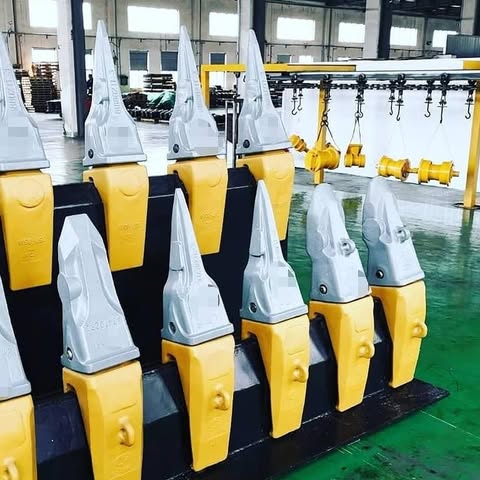
- Hooked, pointed, asymmetric, or polished sprocket teeth are early warning signs of accelerated track wear.
- Sprocket wear must be assessed together with track chain pitch, bushing condition, track tension, rollers, and the front idler.
- A low purchase price can become expensive when a worn track sprocket damages otherwise serviceable undercarriage parts.
- Inspection should be performed safely with the machine isolated from unexpected movement and stored energy.
- Correct machine model, track configuration, tooth profile, bolt pattern, and chain compatibility are essential when ordering a replacement.
Detecting excavator sprocket wear early protects the complete track sprocket system and helps control undercarriage cost. OSHA identifies hazardous-energy control under 29 CFR 1910.147, making safe isolation part of any inspection routine. This guide explains what to inspect, how to distinguish sprocket wear from chain or tension problems, and when replacement is more economical than continued operation.
Why Excavator Sprocket Wear Matters
Sprocket wear matters because the drive tooth is the contact point that transfers motor torque into the track chain.
During normal travel, the sprocket engages the chain bushing and repeatedly loads the tooth flank. Abrasive soil, rock dust, misalignment, poor lubrication, incorrect track tension, and worn bushings can change the contact pattern. Once the tooth profile becomes thin or hooked, the chain may no longer seat smoothly. The result can be noise, vibration, poor travel efficiency, chain climbing, or a thrown track.
A worn track sprocket can also damage components that still appear usable.
Continued operation may force the chain to ride on an incorrect part of the tooth. That increases localized loading on bushings, links, rollers, and the front idler. In severe cases, replacing only the sprocket provides limited value because the chain pitch and tooth geometry no longer match. The correct decision therefore depends on the condition of the complete undercarriage, not on one isolated component.
Early Signs of Track Sprocket Wear
The most useful early warning sign is a change in tooth shape rather than a single measurement.
1. Hooked or sharpened teeth
Healthy teeth retain a broad, controlled working profile. Wear can make the drive side concave, pointed, or visibly hooked. A hook indicates that material has been removed from the load-bearing face and that chain engagement is becoming less stable.
2. Uneven tooth profiles
Uneven teeth often indicate misalignment, irregular chain wear, packed material, or a problem with the drive system.
Compare several teeth around the sprocket instead of inspecting only the most visible section. Differences between the left and right sides, or between adjacent teeth, deserve attention. Uneven wear can reveal a wider problem that a replacement sprocket alone will not correct.
3. Abnormal noise and chain movement
Repeated clunking, skipping, vibration, or visible chain lift during travel can indicate poor engagement.
Noise is not proof of sprocket failure. It may also come from a loose track, worn bushings, damaged rollers, a dry idler, or debris trapped inside the undercarriage. Use sound as a reason to inspect, not as a substitute for inspection.
4. Metal debris near the final drive
Fresh metallic particles around the sprocket or track frame can indicate active contact damage.
Clean the area before assessing it. Dried mud can hide tooth wear, while rock fragments can create marks that resemble metal loss. Record photographs from the same angle during each inspection so that progression is easier to identify.
5. Track derailment or chain climb
A track that repeatedly climbs the sprocket or comes off the undercarriage requires immediate investigation.
Possible causes include sprocket wear, incorrect track tension, damaged chain links, a bent track frame, worn rollers, or a front idler that no longer guides the chain correctly. Repeated derailment should not be solved by simply tightening the track without identifying the underlying cause.
How to Inspect an Excavator Sprocket
A reliable inspection combines visual evidence, operating symptoms, and comparison with the manufacturer’s service limits.
- Park the excavator on stable ground, lower the attachment, shut down the machine, and prevent unexpected movement.
- Follow the site energy-control procedure before placing hands or tools near the track assembly. OSHA’s hazardous-energy requirements are published in 29 CFR 1910.147.
- Remove packed soil from the sprocket, chain, rollers, and idler so the actual contact surfaces are visible.
- Inspect tooth tips, tooth flanks, sprocket segments, retaining bolts, and the area around the final drive.
- Check whether the chain bushings sit centrally on the teeth or appear to climb, ride high, or contact one side.
- Measure or compare the relevant wear dimensions using the machine manufacturer’s manual or an approved undercarriage inspection method.
- Record the machine hours, working environment, track tension condition, photographs, and recommended action.
Never rely on a generic replacement dimension when a machine-specific wear limit is available. Excavator models with similar operating weights can use different chain pitches, sprocket profiles, segment designs, and mounting arrangements.
Wear Assessment Table for Track Undercarriage Parts
The following screening table is an inspection framework, not a substitute for the manufacturer’s service limit.
| Screening level | Visual condition | Operating evidence | Recommended action | Priority score |
|---|---|---|---|---|
| Low concern | Tooth profile remains broad and even | No abnormal noise or chain lift | Clean, photograph, and monitor | 1 of 3 |
| Moderate concern | Visible flank wear, polishing, or minor asymmetry | Occasional noise or uneven travel | Measure against service data and inspect chain | 2 of 3 |
| High concern | Hooked, pointed, cracked, or severely uneven teeth | Chain climb, derailment, or repeated impact | Stop for technical assessment and plan replacement | 3 of 3 |
The priority score is an author-developed screening aid. It is not an OEM tolerance, failure prediction, or warranty standard.
Sprocket Wear Versus Other Undercarriage Problems
The same operating symptom can have several causes, so diagnosis must cover the entire undercarriage.

| Observed symptom | Possible sprocket cause | Other component to inspect | Initial check |
|---|---|---|---|
| Track jumps or climbs | Hooked tooth or incorrect engagement | Track tension, chain links, front idler | Check alignment and chain seating |
| Clicking during travel | Irregular tooth contact | Roller flange, loose hardware, debris | Inspect both sides under clean conditions |
| Fast chain wear | Worn tooth profile | Bushings, pins, track tension | Compare chain pitch with sprocket condition |
| Reduced travel smoothness | Uneven drive engagement | Rollers, idler, final drive | Check for leakage, damage, and misalignment |
A sprocket diagnosis becomes stronger when the tooth profile and chain condition tell the same story. If the sprocket looks worn but the chain is relatively new, verify part compatibility and installation history. If both sprocket and chain are heavily worn, replacing only one may create premature wear in the replacement component.
When Should You Replace a Track Sprocket?
Replace a track sprocket when its profile has passed the approved service limit, engagement is unreliable, or continued use risks damaging matched undercarriage parts.
Replacement timing should consider the application. Quarrying, coal handling, mining, port stockpiles, and large earthmoving projects expose the undercarriage to abrasive fines and high impact. General excavation may produce a different wear pattern, especially when the machine spends substantial time traveling on hard surfaces. The same visual condition can therefore have different consequences depending on travel frequency, soil type, slope, loading, and maintenance quality.
Total cost is more useful than purchase price alone.
Compare the cost of the sprocket with expected downtime, labor, freight, chain compatibility, and the risk of replacing adjacent parts later. A segment-style design may simplify field replacement on some machines, while a one-piece design may suit another configuration. The choice must follow the machine’s original mounting and drive arrangement rather than a generic product description.
How to Choose Replacement Undercarriage Parts
Correct identification is the first quality check for an excavator sprocket order.
- Provide the machine brand, exact model, serial number where available, operating weight class, and production configuration.
- Confirm track shoe width, chain type, pitch, link count, sprocket segment arrangement, bolt pattern, and tooth profile.
- State whether the machine operates mainly in rock, abrasive sand, clay, demolition, forestry, mining, or general construction.
- Ask for a drawing or dimensional confirmation before production when the part is not a direct documented replacement.
- Request material, heat-treatment, inspection, and packing information appropriate to the application.
- Confirm whether the quoted part is OEM, aftermarket, or an interchangeable replacement, because brand compatibility does not guarantee complete interchangeability.
Supplier quality is also part of technical selection. A useful pre-delivery process can include drawing approval, visual inspection, dimensional checks, hardness documentation where relevant, and photographs before shipment. For international buyers, clear part identification and packaging records reduce the risk of receiving a visually similar but incompatible component.
Maintenance Practices That Slow Sprocket Wear
Maintenance reduces sprocket wear by preserving correct chain engagement and preventing avoidable loads.
Keep the undercarriage clean enough to identify abnormal wear, but avoid using cleaning pressure in a way that forces contamination into seals. Check track tension according to the machine manufacturer’s procedure and working conditions. Excessive tension increases resistance and loading; insufficient tension can promote chain instability and derailment. Inspect rollers, idlers, bushings, bolts, and guards during the same service event.
Operator behavior also affects service life. Minimize unnecessary counter-rotation on abrasive ground, avoid prolonged high-speed travel when the job does not require it, and use gradual steering where practical. These practices do not eliminate wear, but they can reduce shock loading and make abnormal changes easier to detect.
FAQ
What does a worn excavator sprocket look like?
Common signs include hooked or pointed teeth, a concave drive face, uneven tooth height, polished contact areas, cracking, and metal debris. The final decision should be based on the manufacturer’s wear criteria and chain engagement, not appearance alone.
Can I replace only the sprocket?
Sometimes, but only after checking the track chain, bushings, links, rollers, idler, and tension. A new sprocket installed against a severely worn chain may experience accelerated wear or poor engagement.
How often should I inspect a track sprocket?
Inspect it during routine undercarriage checks and whenever the machine develops abnormal noise, vibration, chain slack, derailment, or uneven travel. Severe abrasive or high-impact applications justify more frequent condition monitoring.
Does track tension affect sprocket wear?
Yes. Incorrect tension changes chain engagement and increases stress on the sprocket, chain, rollers, and idler. Use the equipment manufacturer’s procedure rather than a universal tension value.
Are aftermarket sprockets interchangeable with OEM parts?
Not automatically. Verify the machine model, chain pitch, tooth geometry, segment or one-piece design, mounting dimensions, bolt pattern, and final-drive configuration before ordering.
What information should I send when requesting a quotation?
Send the machine model and serial number, photographs, current part number if available, tooth or segment configuration, track type, application, quantity, destination, and any drawing or dimensional information.
What is the safest first step before inspection?
Secure the machine on stable ground, lower the attachment, shut down the engine, prevent unexpected movement, and follow the site procedure for controlling hazardous energy. Do not place hands near a track assembly that can move.
About the Supplier
Excavator-spares.com supports buyers sourcing excavator undercarriage parts and related wear components for construction, mining, quarrying, port, and earthmoving applications. Its product scope can include track sprockets, rollers, idlers, track chains, ground engaging tools, adapters, cutting edges, and heavy-duty fasteners. Buyers can improve order accuracy by providing machine details, drawings, application conditions, and inspection requirements before production. Contact the supplier directly to discuss compatibility, documentation, and replacement planning.