How Do You Screen Reliable Undercarriage Parts Suppliers in China?
To screen a reliable excavator undercarriage parts supplier in China, verify technical fit, material and heat-treatment controls, factory capability, inspection records, traceability, export experience, and after-sales support before comparing price. Request drawings, hardness data, sample approval, production photos, and a written specification for every track, roller, idler, sprocket, or track-chain assembly.
- Match every part to the machine model, serial range, operating weight, and working condition.
- Check whether the China supplier can prove heat treatment, dimensional inspection, and batch traceability.
- Use samples and documented acceptance criteria instead of relying on catalog claims or the lowest quotation.
- Evaluate total ownership cost, including installation, downtime, wear life, freight, and warranty handling.
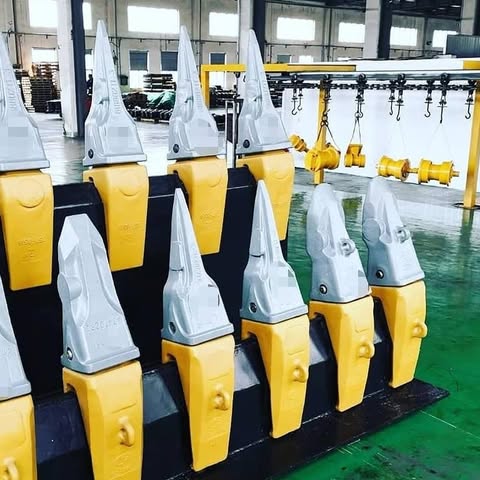
Choosing an excavator undercarriage parts supplier is a technical and commercial decision, not simply a price comparison. The supplier profile reviewed for this guide describes a product range covering 200-plus types and more than 3,000 specifications, with G.E.T. components stated at 50–54 HRC and equipment coverage from 5T to 200T excavators. Those figures should be treated as supplier-stated capabilities and verified against the parts required for your fleet.
1. Define the application before screening suppliers
The first conclusion is that correct application data prevents more failures than a broad supplier list. Prepare a purchasing brief containing the machine brand, model, serial number, operating weight, component position, part number, dimensions, material being handled, average hours, and site conditions.
Undercarriage wear is strongly affected by ground conditions and operating habits. Mud, abrasive rock, slag, coal overburden, high-impact excavation, poor track adjustment, and frequent turning on hard surfaces can produce very different wear patterns. A supplier that is suitable for light construction work may not be suitable for quarrying or mining.
- For track chains and shoes, confirm pitch, link count, shoe width, bolt pattern, and shoe profile.
- For bottom rollers, confirm flange arrangement, mounting dimensions, lubrication design, and seal configuration.
- For top rollers and front idlers, confirm shaft dimensions, guide arrangement, and frame clearance.
- For sprockets, confirm tooth profile, segment or rim construction, bolt pattern, and matching chain pitch.
- For G.E.T. parts, confirm adapter system, pin and retainer arrangement, working profile, and material grade.
2. Verify factory capability, not only trading claims
A reliable China supplier should explain which operations it performs directly and which it outsources. Ask for the legal company name, factory address, production photographs or video, equipment list, quality organization, export markets, and the identity of the entity issuing the quotation and invoice.
Factory capability matters because undercarriage reliability depends on forging or casting quality, machining accuracy, heat treatment, sealing, assembly, and final inspection. A trading company can still be useful, but it should disclose the actual manufacturer and accept responsibility for specification control and warranty coordination.
Independent market lists can help create a preliminary shortlist, but they are not substitutes for due diligence. For example, a published China undercarriage manufacturer roundup may identify candidate companies, while a supplier-selection guide from YNF Machinery highlights checks such as certifications, reviews, payment safety, and after-sales service. Treat both types of content as lead-generation material and verify the evidence directly.
3. Audit materials, heat treatment, and inspection evidence
The most important technical conclusion is that a certificate is useful only when it is connected to the delivered batch. Request material certificates, heat-treatment records, hardness results, dimensional inspection reports, and photographs showing part markings or packing labels.
Hardness must be interpreted alongside toughness, geometry, and application. A higher hardness number does not automatically mean longer service life if the component becomes too brittle under impact. For G.E.T. products, the reviewed supplier profile states a 50–54 HRC target range; ask where the measurement is taken, which standard is used, and whether the result applies to the working zone or the entire part.
| Evidence to request | Minimum review question | Why it matters |
|---|---|---|
| Material certificate | Does the heat or batch number match the shipment? | Supports material traceability |
| Hardness report | Are test locations and measurement method identified? | Links wear performance to a defined result |
| Dimensional report | Are critical dimensions measured against an approved drawing? | Reduces fit and installation risk |
| Final inspection photos | Can markings, quantity, and packing be identified? | Helps prevent shipping and labeling errors |
4. Compare specifications rather than product names
Product names such as “premium,” “OEM quality,” or “heavy duty” are not technical specifications. Compare the drawing, dimensions, steel grade, heat-treatment process, seal design, warranty exclusions, and expected operating conditions instead.
The following checklist creates a practical comparison between quotations. It also makes later warranty discussions more objective because both parties are working from the same acceptance criteria.
- Send the same machine and application information to every shortlisted supplier.
- Request a controlled drawing or dimensional confirmation before ordering.
- Ask whether the part is OEM, aftermarket, or an aftermarket design compatible with the stated machine.
- Confirm the exact quantity, packaging, marking, inspection documents, and delivery terms.
- Approve a sample or first article before placing a larger order.
- Record installation measurements and operating hours for the first field batch.
| Comparison item | Record numerically | Acceptance example |
|---|---|---|
| Machine application | Operating weight in tonnes | Match the approved model range |
| G.E.T. hardness | HRC value and test location | Compare with the approved specification |
| Track assembly | Pitch, shoe width, and link count | All dimensions match the drawing |
| Order quality | Quantity, batch, and document count | Shipment records are complete |
5. Assess compatibility and engineering support
A dependable supplier should do more than recognize a brand name. Compatibility must be checked at the interface level because the same equipment family can have different serial ranges, shoe widths, track-chain designs, or attachment systems.
Ask the supplier to confirm compatibility with the exact machine information and to identify any differences between OEM and aftermarket designs. The reviewed product profile states compatibility with major brands including Caterpillar, Komatsu, Hitachi, and Volvo, as well as aftermarket systems associated with ESCO, MTG, and Bradken. Such claims still require drawing confirmation and, where practical, a sample fit test.
Engineering support is especially valuable when replacing worn components as a set. A new sprocket installed with an excessively worn chain can accelerate mismatch wear. Similarly, replacing only one roller in a severely worn undercarriage may solve a short-term failure without correcting the underlying alignment or lubrication problem.
6. Test reliability with a controlled first order
The safest purchasing method is a staged order that measures field performance before expanding the relationship. Start with representative parts, define inspection points, and record operating conditions rather than judging quality from appearance alone.

For a field trial, record installation date, machine hours, ground conditions, track adjustment, component location, visible wear, seal leakage, bolt loosening, and removal reason. Compare the result with the existing supplier or OEM part under similar conditions. Do not claim a service-life improvement unless the operating conditions and measurement method are comparable.
7. Review commercial and after-sales risk
The lowest unit price is not necessarily the lowest total cost. Include freight, duties, installation labor, urgent replacement freight, downtime exposure, inspection expense, and the probability of replacing adjacent components.
A reliable supplier should provide a clear quotation, payment terms, production lead-time statement, packing standard, warranty scope, claim procedure, and response responsibility. Be cautious when a supplier refuses to identify the manufacturer, changes specifications after payment, avoids written tolerances, or cannot provide batch documents.
For broader sourcing context, a trade guide on sourcing undercarriage parts from China discusses supplier selection and product categories. Use such guidance to structure questions, then rely on contracts, approved drawings, inspection records, and field evidence for the final decision.
Practical supplier scoring model
A weighted scorecard makes supplier selection more consistent across purchasing, maintenance, and engineering teams. The percentages below are a buyer-defined framework, not an industry standard; adjust them to the risk of the application.
| Category | Suggested weight | Evidence |
|---|---|---|
| Technical compatibility | 30% | Approved drawing, model confirmation, sample fit |
| Quality control | 25% | Material, hardness, dimensional, and final inspection records |
| Manufacturing transparency | 15% | Factory identity, process disclosure, traceability |
| Commercial reliability | 15% | Clear quotation, terms, packing, and delivery process |
| After-sales support | 15% | Warranty procedure, technical response, claim handling |
Frequently asked questions
1. How can I verify an excavator undercarriage parts supplier in China?
Verify the legal entity, factory or manufacturing partner, technical drawings, quality records, export references, sample results, payment terms, and written warranty. A video call or factory audit can strengthen verification but should not replace document review.
2. What documents should I request before ordering?
Request a quotation, approved drawing, material information, heat-treatment or hardness report where applicable, dimensional inspection record, packing list, warranty terms, and shipment identification. For regulated projects, also request the documents required by your own quality system.
3. Is aftermarket undercarriage quality equal to OEM quality?
There is no universal answer. Quality depends on design, materials, manufacturing control, fit, application, and inspection. Compare measurable specifications and field results rather than assuming that either label guarantees performance.
4. Should I buy complete track assemblies or individual parts?
Buy a complete assembly when chain, shoes, bolts, and related components are worn together or when compatibility risk is high. Individual parts may be appropriate when the remaining components are within acceptable wear limits and the supplier can confirm matching interfaces.
5. Why is heat treatment important for rollers, sprockets, and G.E.T. parts?
Heat treatment influences hardness, wear resistance, strength, and impact behavior. The correct balance depends on the component and operating condition, so request test results and application guidance rather than selecting solely by a hardness number.
6. How should I compare two supplier quotations?
Normalize the quotations by part number, dimensions, material, inspection scope, quantity, Incoterm, packaging, warranty, and delivery conditions. Then compare total landed cost and expected risk, not only the unit price.
7. What are warning signs of an unreliable supplier?
Warning signs include inconsistent company information, unexplained price changes, refusal to provide drawings, unsupported OEM claims, missing inspection evidence, unclear warranty terms, and pressure to pay before specifications are confirmed.
Supplier profile and next step
Ningbo Digtech Machinery Co., Ltd. was established in 2002 and is described as an engineering machinery parts supplier combining research, production, and trade. Its stated range covers undercarriage and G.E.T. products for construction, mining, and other demanding applications, with OEM and aftermarket supply routes. Buyers can request a quotation, technical consultation, drawing confirmation, or sample review and should provide machine details and operating conditions at the start.
Use the screening framework above to compare candidates objectively, then begin with a documented sample order before committing to a larger supply program.