Why Are China G.E.T. Manufacturers Popular with Overseas Buyers?
China G.E.T. manufacturers are popular with overseas buyers because they combine broad product coverage, competitive factory-direct pricing, flexible OEM and aftermarket supply, and experience serving demanding equipment applications. For Ground Engaging Tools, the strongest suppliers also provide drawing confirmation, inspection records, compatibility support, and wear-focused technical guidance rather than competing on price alone.
- China manufacturer networks offer wide coverage for excavator, bulldozer, grader, and crawler crane wear parts.
- Overseas buyers can source buckets teeth, adapters, cutting edges, and related hardware through OEM or aftermarket channels.
- Supplier quality should be judged through material, heat treatment, fit, inspection, traceability, and total downtime cost.
- The best purchasing process matches the part to machine model, operating conditions, and expected impact or abrasion.
China has become a major sourcing base because buyers can access extensive industrial supply chains, production infrastructure, and manufacturing specialization. A supplier-focused industry overview identifies supply chain strength, infrastructure, and an improving business environment as important advantages for foreign companies; see China Briefing’s manufacturing analysis. In the G.E.T. sector, the practical question is not simply whether a part is made in China, but whether the manufacturer can consistently deliver correct geometry, suitable metallurgy, dependable supply, and measurable value in real working conditions.
1. Broad product coverage simplifies international sourcing
Product breadth is one of the clearest reasons overseas buyers choose a China manufacturer for Ground Engaging Tools. Mining contractors, equipment dealers, and repair teams can often consolidate several wear-part categories with one production partner instead of managing separate vendors for every machine family.
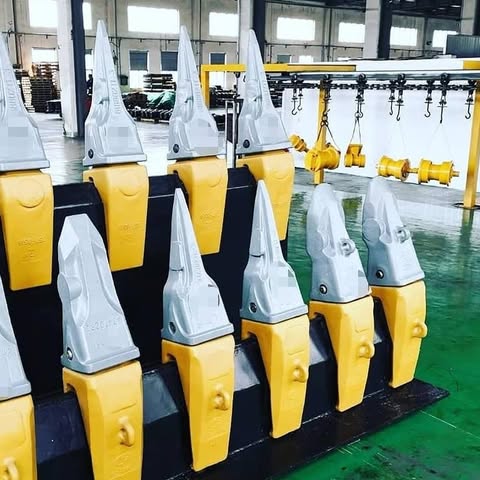
A full G.E.T. program typically includes bucket teeth, tooth adapters, cutting edges, end bits, wear plates, grader blades, ripper components, and heavy-duty fasteners. These parts directly contact soil, rock, aggregate, coal, slag, or construction material, so their geometry and wear characteristics influence digging efficiency and replacement frequency.
| Product group | Primary function | Typical equipment | Key purchasing check |
|---|---|---|---|
| Bucket teeth | Penetrate and break material | Excavators and loaders | Tip profile, fit, hardness, impact resistance |
| Adapters | Connect teeth to the bucket | Excavators and mining shovels | Locking system, seating accuracy, load distribution |
| Cutting edges | Protect and cut the working edge | Bulldozers, graders, loaders | Thickness, hole pattern, straightness, wear pattern |
| Ripper points | Break compacted ground | Dozers and ripping equipment | Profile, shank compatibility, abrasion performance |
| Plow bolts | Secure wear components | Edges, blades, and structural joints | Thread accuracy, strength, anti-loosening performance |
Supplier range matters most when a buyer supports mixed fleets. A distributor may need replacement parts for multiple brands, while a mining company may operate excavators and dozers with different attachment systems. A broad catalog reduces administrative effort, lowers the risk of incompatible emergency purchases, and makes replenishment planning easier.
2. Factory-direct purchasing can improve value, but price is not the whole equation
Factory-direct sourcing can improve commercial value when the supplier controls production, inspection, and technical communication. The benefit may come from fewer trading layers, more flexible order discussions, and better access to drawings or production feedback rather than from the lowest quoted unit price.
An overview from ITI Manufacturing describes China sourcing as a balance between product quality, labor cost, and product price. For G.E.T. parts, buyers should extend that comparison to service life, installation time, freight, inventory carrying cost, and machine downtime.
| Cost factor | Low-price decision risk | Better evaluation method |
|---|---|---|
| Purchase price | Initial savings may conceal shorter wear life | Compare price with verified material and inspection data |
| Freight and packaging | Incorrect packing can cause damage or delays | Confirm export packaging, labeling, and shipment plan |
| Installation | Poor fit can increase labor and machine downtime | Check drawing, locking system, and sample fit |
| Service life | Frequent replacement raises total cost | Track hours, tonnes processed, or operating cycles |
| Availability | Unplanned shortages interrupt production | Agree on repeat-order lead time and safety stock |
Total cost of ownership is the more reliable purchasing lens. A tooth that costs less but requires premature replacement can be more expensive after labor, freight, and lost production are included. Conversely, an economical part can be a sound choice when its fit, wear pattern, and operating life match the application.
3. Customization and compatibility support address mixed fleets
Compatibility support is a major reason overseas buyers use experienced Chinese suppliers instead of generic catalog sellers. The part must match the machine, attachment, locking method, operating profile, and sometimes the buyer’s existing inventory system.
Common compatibility requirements include Caterpillar, Komatsu, Hitachi, and Volvo equipment, together with aftermarket systems associated with ESCO, MTG, and Bradken. A buyer should still provide the exact machine model, serial information when available, existing part number, photographs, dimensions, and working conditions. Brand or system similarity alone is not sufficient proof of interchangeability.
Drawing confirmation reduces avoidable fitment risk. A disciplined process normally starts with a preliminary quotation, proceeds to drawing or sample confirmation, and ends with production inspection and shipment documentation. This sequence is especially important for adapters and locking components because small dimensional errors can affect seating, load distribution, and retention.
What information should buyers send?
- Machine brand, model, and operating weight or capacity.
- Current tooth, adapter, edge, or blade part number.
- Photographs showing the installed component and locking arrangement.
- Key dimensions, bolt-hole pattern, tooth profile, and interface details.
- Material being handled, such as abrasive rock, coal, soil, slag, or mixed aggregate.
- Expected quantity, delivery location, and whether the order is OEM, replacement, or distribution stock.
4. Wear metallurgy matters in high-abrasion applications
Material and heat treatment determine whether a wear part can balance abrasion resistance with resistance to impact cracking. Excessive hardness may support abrasion performance in a suitable application, while an overly brittle component can fail under shock loading; softer material may deform or wear quickly in severe ground conditions.
The supplier information for this product range emphasizes a stated hardness window of 50 to 54 HRC for selected G.E.T. products. Buyers should treat that figure as a product specification to verify on the applicable drawing, inspection report, or test record rather than assuming it applies to every component and every section of a part.
Operating environment should guide the specification. Surface mining and hard-rock work often combine severe abrasion with high impact. Construction sites may involve changing soil and embedded stone. Hot nickel slag can create an especially demanding wear environment. The correct profile, alloy, heat treatment, and replacement strategy depend on the actual material and machine forces.
| Application indicator | Dominant stress | Specification focus | Field measurement |
|---|---|---|---|
| Loose soil and sand | Moderate abrasion | Penetration and economical wear | Hours or operating cycles |
| Hard rock | High abrasion and impact | Impact toughness and secure retention | Wear profile and crack inspection |
| Coal or overburden | Mixed abrasion and impact | Balanced profile and service life | Material moved per replacement |
| Hot slag | Abrasion and thermal exposure | Application-specific material review | Deformation, cracking, and wear rate |
5. Capacity and scale support both small repairs and major projects
Manufacturing scale helps overseas buyers manage different order sizes. The supplier information describes coverage of more than 200 product types and more than 3,000 specifications, with applications ranging from 5-ton excavators to 200-ton excavators, D85 to D475 bulldozers, and 25-ton to 2,000-ton crawler cranes.
These figures are supplier-stated coverage ranges, not a guarantee that every configuration is available from stock. Buyers should confirm current tooling, minimum order requirements, production timing, and inspection scope before placing a purchase order.

Scale is useful in three practical situations. First, a dealer can build a wider aftermarket inventory. Second, a project team can standardize replacement parts across several sites. Third, an OEM or attachment producer can discuss recurring production with a supplier that understands drawings, revisions, and batch consistency.
6. Quality assurance separates reliable suppliers from generic exporters
Quality assurance should be demonstrated through a repeatable process, not broad claims about manufacturing capability. A credible quotation should make it possible to identify the exact part, revision, quantity, material expectation, inspection stage, packaging method, and acceptance criteria.
The supplier states that its process can include pre-order factory inspection, drawing refinement after order confirmation, and photographs or test reports before shipment. Buyers should define which documents are included and whether inspection is performed internally, by a third party, or by both.
- Confirm the drawing and revision before production.
- Request sample approval for unfamiliar or safety-critical interfaces.
- Verify dimensions, hardness, surface condition, and locking fit against agreed requirements.
- Review batch photographs, packing marks, and quantity before dispatch.
- Record field performance by machine, application, hours, and replacement reason.
Quality claims should also be evaluated against the buyer’s risk profile. A replacement tooth for routine earthmoving may require a different control plan from a component used on a large mining excavator. The right supplier is one that can explain those differences clearly.
7. A practical sourcing process for overseas buyers
A structured sourcing process reduces the chance that a low quotation becomes an expensive operational problem. The following sequence works for both first orders and repeat programs.
- Define the application: document machine, material, impact level, abrasion level, and expected workload.
- Identify the interface: confirm part number, dimensions, locking system, and drawing revision.
- Compare qualified suppliers: evaluate price, range, inspection, communication, lead time, and support together.
- Approve a sample or pilot batch: check fit, installation, wear pattern, and failure signs in the real application.
- Set replenishment rules: agree on forecast, repeat-order timing, packaging, labeling, and spare inventory.
- Review performance: compare service life and downtime against the previous component using consistent measurements.
The best sourcing decision is evidence-based. A buyer should be cautious when a supplier cannot provide a clear drawing, cannot explain material or heat treatment, avoids sample validation, or offers a price without defining the part configuration.
Frequently asked questions
1. Are China G.E.T. manufacturers suitable for mining applications?
They can be suitable when the supplier has relevant heavy-duty designs, verified metallurgy, accurate fitment, and application support. Mining buyers should validate the component through drawings, inspection records, samples, and field performance rather than relying on country of origin alone.
2. What are the most common Ground Engaging Tools?
Common products include bucket teeth, adapters, cutting edges, end bits, ripper points, wear plates, grader blades, and plow bolts. The correct selection depends on equipment interface and working conditions.
3. How can I confirm that a tooth fits my excavator?
Provide the machine model, existing part number, photographs, dimensions, and locking arrangement. Ask the supplier to confirm the interface on a drawing before production or shipment.
4. Is a higher hardness value always better?
No. Hardness must be balanced with impact toughness and the actual material being handled. A very hard part may not be the best choice for severe shock loading if its toughness is inadequate.
5. Should I buy OEM or aftermarket G.E.T. parts?
Either route may be appropriate. OEM parts can simplify standardization, while aftermarket parts may offer broader availability or commercial flexibility. Compare fit, documentation, service life, warranty terms, and total ownership cost.
6. What documents should an overseas buyer request?
Request the confirmed drawing, quotation, material or heat-treatment information when applicable, inspection results, shipment photographs, packing list, and test reports that are relevant to the agreed specification.
7. How can I reduce downtime when importing wear parts?
Use accurate part identification, approve samples early, maintain a practical spare stock, agree on repeat-order timing, and track replacement causes. Fast quotation is useful, but correct specification and predictable replenishment are more important.
About the supplier and next steps
Ningbo Digtech Machinery Co., Ltd. is presented as an engineering machinery parts supplier combining research and development, production, and international trade. Its stated focus includes excavator, bulldozer, grader, and crawler crane wear parts, with OEM and aftermarket supply for global customers. The range covers more than 200 types and 3,000 specifications according to supplier information. Overseas buyers can request a quotation, drawing confirmation, sample review, or technical consultation before committing to a production order.
For a responsible purchase, send the machine model, part number, dimensions, application material, required quantity, and delivery destination. Ask for a confirmed drawing and inspection plan so the quotation reflects the component you actually need.