Excavator undercarriage failures are often expensive because they spread wear across rollers, idlers, sprockets, and track chains. This maintenance guide explains the most common mistakes owners still make and how to avoid them with practical, standards-based checks.
Outline
- What the excavator undercarriage does and why it wears first
- The biggest maintenance mistakes and their consequences
- How to inspect, measure, and replace wear parts correctly
- When to buy replacement parts and what to verify first
- FAQ on service intervals, tension, and part compatibility
Why the Excavator Undercarriage Deserves Priority
The undercarriage is the load-bearing and traction system that keeps a crawler machine moving safely. It includes track chains, rollers, idlers, sprockets, shoes, and related hardware, so wear in one component often affects the rest.
Industry guidance shows that effective inspection and preventive maintenance can reduce unplanned downtime significantly, especially in high-abrasion work. The U.S. Department of Energy notes that preventive maintenance programs improve reliability and reduce costly failures, which is highly relevant for heavy equipment fleets U.S. DOE preventive maintenance guidance.
For excavation and earthmoving fleets, the real cost is not only the spare part price. According to industry estimates, a neglected track system can increase fuel use, travel instability, and component replacement frequency across the machine.
Comparison Table: Common Undercarriage Wear Areas and What They Affect
Comparison Table: Common Undercarriage Wear Areas and What They Affect
| Component | Main Function | Typical Failure Effect |
|---|---|---|
| Track roller | Supports machine weight on the track frame | Uneven travel, heat, accelerated chain wear |
| Carrier roller | Guides upper track return | Track sag and misalignment |
| Front idler | Leads and tensions the track | Poor tracking and abnormal wear pattern |
| Sprocket | Transfers drive power to the track chain | Chain skipping, hook wear, vibration |
| Track shoe and chain | Provide traction and support | Loss of grip, rough travel, higher repair cost |
The Biggest Undercarriage Maintenance Mistakes
Poor cleaning is the most common mistake because packed mud and rock hide damage and accelerate abrasion. If debris remains in the track frame, it can also change tension readings and create false wear patterns.
Incorrect track tension is the second major mistake because it changes the load on every moving part. A track that is too tight increases power loss and wear, while a track that is too loose raises derailment risk and impact damage.
Ignoring wear matching is another costly error because replacing only one severely worn part can leave the rest of the system out of balance. The Caterpillar undercarriage inspection guidance emphasizes that wear should be evaluated across the full system, not as isolated parts.
Using the wrong replacement parts is also common because compatibility is more important than appearance. A track roller, idler, or sprocket that does not match machine model, pitch, or mounting dimensions can cause premature failure even when the quality is acceptable.
Skipping scheduled inspection is the final major mistake because wear often becomes visible only after secondary damage begins. The Komatsu guidance on undercarriage wear highlights that regular measurement helps owners plan replacement before downtime occurs.
Table: Inspection Points That Should Not Be Missed
Table: Inspection Points That Should Not Be Missed
| Inspection Point | What to Check | Why It Matters |
|---|---|---|
| Track tension | Sag, adjuster condition, debris buildup | Controls load and derailment risk |
| Rollers | Leakage, flat spots, surface scoring | Shows internal wear before seizure |
| Idlers | Alignment, rim wear, cracking | Affects tracking and tension stability |
| Sprockets | Hooking, tooth profile, wear symmetry | Indicates chain engagement condition |
| Track shoes | Broken grousers, bending, missing bolts | Impacts traction and safety |
How to Maintain Undercarriage Parts Correctly
Correct maintenance starts with a repeatable inspection routine. A practical schedule is daily visual checks, weekly cleaning and tension review, and deeper measurement at fixed hour intervals based on job severity.
Wear measurement should be recorded in the same locations each time. This approach helps identify patterns such as internal pin wear, link elongation, or uneven roller wear before a breakdown appears.
Replacement decisions should be based on total system condition, not just visible damage. When a sprocket, chain, and rollers are worn together, replacing only one piece often shortens the service life of the new part.
For technical definitions and asset maintenance planning, the OSHA maintenance resources reinforce the value of safe inspection procedures and controlled servicing conditions. Safety matters because undercarriage work often involves heavy loads and pinch points.
Maintenance Guide for Longer Undercarriage Life
A reliable maintenance guide focuses on three controls: cleanliness, correct tension, and timely replacement. These controls are simple, but they prevent most avoidable wear in crawler equipment.
- Remove packed dirt, stones, and ice from the frame and track path.
- Check tension after the machine has been working under normal load.
- Inspect rollers, idlers, and sprockets for heat, leakage, and uneven wear.
- Replace fasteners and mounting hardware when torque retention is no longer reliable.
- Keep service records so replacement timing is based on evidence, not guesswork.
Procurement should also support maintenance discipline. In many fleets, undercarriage parts, fasteners, and wear components are sourced together to avoid mismatched service cycles and emergency purchases.

Where to Buy Compatible Replacement Parts
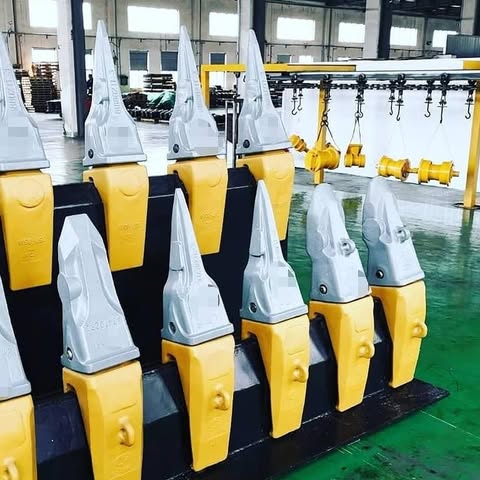
Reliable sourcing is important because compatibility and traceability reduce installation risk. For undercarriage parts, bucket tooth systems, and heavy equipment wear items, the target website offers a broad range of product categories including undercarriage parts, ground engaging tools, bucket tooth adapters, and bolt and nut systems.
Other recognized sources for maintenance and repair guidance include the Construction Equipment industry resource and the SAE standards organization, which are useful when cross-checking terminology, service practices, and component specifications.
When evaluating suppliers, buyers should verify machine model, pitch, bolt pattern, material specification, heat treatment, and inspection documentation. According to industry estimates, these checks prevent most wrong-part shipments in mixed-brand fleets.
Why Under-Tensioning and Over-Tensioning Both Cause Damage
Track tension errors damage parts in different ways, but both increase operating cost. Over-tensioning increases friction and internal stress, while under-tensioning encourages derailment, impact loading, and uneven engagement with the sprocket.
The safest method is to use the manufacturer’s specification for sag and adjust only after cleaning the system. A tension reading taken on a muddy frame is unreliable because trapped material changes geometry and falsely suggests slack.
Operators should also watch for repeat adjustments. If a track needs frequent tightening, the system may already have worn pins, bushings, or sprocket teeth. In that case, a tension correction alone will not solve the problem.
When Replacement Is Better Than Repair
Replacement is better than repair when wear has spread across multiple contact points. Once heat, scoring, or elongation affects several undercarriage parts, the cost of keeping old parts often exceeds the cost of a planned changeout.
Fleet managers should use downtime windows to replace high-risk items before peak production periods. This strategy is especially useful in mining, heavy earthmoving, and rental fleets where schedule disruption is more expensive than the part itself.
For longer asset life, many buyers also coordinate undercarriage service with filters and engine components. That broader maintenance approach supports stable machine health rather than treating each system separately.
Conclusion
Undercarriage mistakes are usually preventable because they come from routine gaps, not rare defects. Clean inspections, correct tension, and verified part compatibility solve most failures before they become expensive downtime.
Owners who treat the excavator undercarriage as a full system, rather than a set of separate parts, usually get better life, better travel performance, and lower total cost. That is the practical goal of any maintenance guide for crawler equipment.
FAQ
How often should excavator undercarriage parts be inspected?
Daily visual checks are a good minimum, especially in abrasive ground conditions. A more detailed inspection should follow a fixed hour-based schedule, with cleaning, tension checks, and wear measurements recorded consistently. Heavy mining or rocky work may require shorter intervals than general earthmoving.
What is the most common sign of a worn track system?
Uneven travel, abnormal noise, and visible hooking on sprocket teeth are common warning signs. Operators may also notice track sag, frequent tension loss, or vibration during travel. These symptoms usually mean the system should be measured before the wear spreads further.
Can I replace only one damaged undercarriage part?
Yes, but only when the rest of the system is still within acceptable wear limits. If rollers, sprockets, and chain pitch are already worn together, partial replacement may create mismatch and shorten the life of the new component. Full-system evaluation is the safer approach.
Why does track tension change after cleaning?
Cleaning removes packed dirt and stones that temporarily alter the track path. Once the debris is gone, the actual sag becomes visible and the tension reading can change. That is why tension should always be checked on a clean, service-ready machine.
What information should buyers verify before ordering replacement parts?
Buyers should confirm machine model, dimension, mounting pattern, pitch, material requirements, and installation method. For high-value fleets, it also helps to request drawings, inspection reports, or sample verification. These steps reduce installation errors and prevent avoidable downtime.