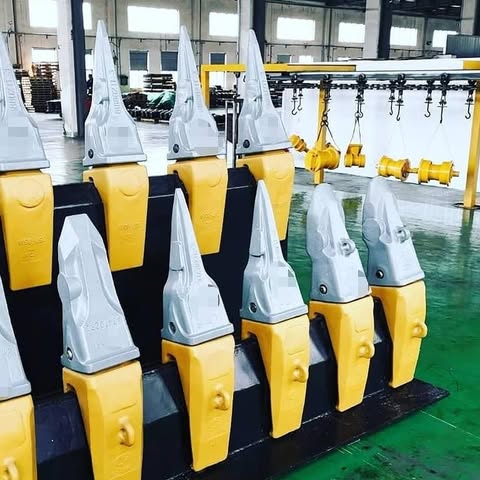
Bucket adapter installation affects wear life more than many buyers expect. When the base connection is wrong, the tooth system loses strength, stability, and efficient penetration.
Why bucket adapter installation matters for service life
Bucket adapter installation is the foundation of a reliable front-end wear system. The adapter transfers digging force from the bucket lip to the tooth, so even small errors can create stress concentration and premature cracking.
For excavators in mining, earthmoving, and heavy-duty loading, the connection must stay stable under vibration and impact. According to OSHA excavation safety guidance, equipment condition and attachment integrity are essential to safe operation, and wear-related failures can quickly create downtime risk.
At the system level, the adapter works with the tooth, pin, and retainer as one assembly. If one part is mismatched, the entire bucket tooth system usually wears faster than planned.
Five bucket adapter installation errors that reduce service life
Five installation errors dominate most early failures in the field. They are usually simple to prevent, but costly to ignore.
- Incorrect adapter alignment during welding or mounting
- Using the wrong adapter size or tooth profile
- Poor lip preparation before installation
- Weak pin, retainer, or locking engagement
- Ignoring post-installation inspection and wear checks
These errors often appear together rather than separately. A poor fit can lead to unstable locking, which then accelerates edge wear and tooth loss.
1. Incorrect adapter alignment
Incorrect adapter alignment is one of the fastest ways to shorten service life. When the adapter sits off-center or at the wrong angle, load does not enter the bucket lip evenly.
That misalignment causes uneven tooth wear, poor penetration, and side loading on the weld zone. Over time, the bucket lip can deform, and the adapter may crack at the root.
Good alignment is especially important for high-impact work. The NIOSH heavy equipment safety resources emphasize that vibration, impact, and maintenance quality all affect equipment reliability in mining environments.
2. Wrong adapter size or tooth profile
Wrong adapter size or tooth profile creates hidden mechanical loss. The tooth may fit physically, but the geometry can still be wrong for the bucket lip and application.
For example, a profile designed for lighter earthmoving may not survive rock loading or abrasive mine conditions. In those cases, the adapter-tooth interface can loosen faster, and the leading edge loses metal faster than expected.
To avoid mismatch, buyers should verify machine model, pin size, lip dimensions, and working condition. This is why suppliers with broad product coverage, such as ground engaging tools and bucket tooth components, are often used for exact model matching.
3. Poor lip preparation before installation
Poor lip preparation is a common reason welds fail early. Rust, paint, slag, oil, and old hardfacing can prevent full contact and weaken the joint.
The lip surface should be cleaned, measured, and checked for distortion before any adapter is installed. If the lip is worn unevenly, the new adapter may inherit a weak base and fail sooner than expected.
According to the American Welding Society, proper surface condition and procedure control are essential for reliable welded joints. That principle applies directly to wear part installation.
4. Weak pin and retainer engagement
Weak pin and retainer engagement often causes tooth loss before the adapter itself fails. If the locking parts do not fully seat, vibration can slowly work the tooth loose.
Once movement starts, impact loads rise sharply at the contact points. The result is slot wear, pin ovalization, and a much shorter replacement interval.
Reliable locking is especially important in abrasive and high-vibration duty cycles. In practice, the adapter, pin, and retainer should be treated as one functional set rather than separate consumables.
5. Skipping inspection after installation
Skipping inspection after installation allows small defects to become expensive failures. A new assembly may look correct, but minor fit issues can appear during the first hours of operation.
Operators should check retention, movement, cracking, and wear pattern after initial use. A short inspection cycle is far cheaper than emergency replacement in the field.

For maintenance programs, the Caterpillar operations and maintenance guidance shows how early inspection helps preserve attachment life and reduce unplanned stoppages.
Comparison Table: Common Installation Errors and Their Typical Failure Patterns
| Error | Typical symptom | Main life impact |
|---|---|---|
| Misalignment | Uneven wear, edge cracking | High stress concentration |
| Wrong fit | Loose seating, poor penetration | Fast interface wear |
| Poor lip prep | Weak weld bond, distortion | Early joint failure |
| Weak retention | Tooth loss, pin wear | Interrupted operation |
| No inspection | Small defects become major damage | Shorter replacement cycle |
How to install an excavator adapter correctly
Correct installation starts with fit verification, not welding speed. The adapter should match the bucket lip dimensions, tooth series, and expected duty cycle before work begins.
- Confirm machine model, lip thickness, and tooth system specification.
- Clean the lip and remove contamination or previous build-up material.
- Check the adapter position, centerline, and spacing before fixing it.
- Install according to the approved welding or mounting procedure.
- Verify pin retention, then inspect after the first operating hours.
Technical control matters because the joint must survive repeated impact. For buyers sourcing replacement parts, excavator spare parts and bucket tooth adapters are usually selected only after fit, material, and operating condition are confirmed.
Specification Table: Practical Checks Before and After Installation
| Check point | Before installation | After installation |
|---|---|---|
| Fit and geometry | Confirm model, size, and interface | Verify seating and symmetry |
| Surface condition | Remove rust, oil, and old weld residue | Inspect for cracks or spatter |
| Retention | Check pin and retainer compatibility | Confirm full lock engagement |
| Wear pattern | Assess operating condition | Track early wear or looseness |
Supplier selection for replacement parts and fit accuracy
Supplier selection affects service life because fit accuracy and consistency depend on manufacturing control. A well-made adapter still fails early if the dimensions do not match the machine or tooth series.
For global sourcing, buyers often compare product coverage, technical support, and replacement consistency. A supplier directory may include bucket tooth and adapter solutions, along with related wear parts such as pins, retainers, and bolts.
In parallel, major industry suppliers and OEM support channels can provide reference specifications, though part availability and compatibility should always be checked by model. That approach reduces rework and lowers the risk of premature wear.
- Match the exact machine model and bucket lip dimensions
- Confirm whether the application is mining, earthmoving, or demolition
- Request material and heat-treatment information when available
- Ask for inspection or test documentation for export orders
Why tooth system compatibility is more important than price
Tooth system compatibility is a better purchasing criterion than the lowest unit price. A cheaper part that wears quickly or loosens early often increases the total cost of ownership.
In heavy-duty use, the real cost includes labor, machine downtime, fuel waste from poor penetration, and repeated replacement cycles. Industry estimates show that attachment failures can cost far more than the original part price when equipment is running continuously.
This is why a stable bucket tooth system should be judged by fit, retention, wear resistance, and maintenance interval together. A balanced specification usually performs better than an oversized or under-specified alternative.
Maintenance signs that the adapter needs attention
Early warning signs usually appear before complete failure. If the tooth begins to move, the adapter should be checked immediately.
Common signs include unusual noise, visible gap formation, uneven tooth wear, lip deformation, and cracking near the weld or base. These symptoms often indicate poor installation or a system compatibility issue.
Regular inspection is especially valuable in mining and continuous operation. The Federal Highway Administration construction publications also highlight the importance of structured inspection and maintenance practices for equipment reliability.
FAQ
What is the most common cause of early adapter failure? The most common cause is poor fit or misalignment during installation. When the adapter does not sit correctly on the bucket lip, stress concentrates at the weld or base. That usually leads to cracking, loosening, or abnormal tooth wear much sooner than expected.
Should the adapter and tooth always come from the same system? Yes, they should be matched as a system whenever possible. Different profiles can look similar but still have different retention geometry and load paths. If compatibility is uncertain, confirm model dimensions, pin size, and locking method before installation.
How can I tell if the pin and retainer are installed correctly? A correct installation should seat fully, lock firmly, and show no visible movement during initial operation. If the tooth rattles, shifts, or leaves unusual wear marks, the locking parts may not be engaged properly and should be checked immediately.
Does welding quality affect service life more than material hardness? Both matter, but welding quality often determines whether the part survives long enough to use its hardness advantage. A strong material with poor bonding, contamination, or distortion may fail early. Good installation allows the material properties to perform as designed.
When should a worn adapter be replaced instead of repaired? Replace it when cracking, deformation, slot wear, or lip damage reaches a level that threatens retention or bucket strength. Minor surface wear may be manageable, but structural damage usually makes repair uneconomical and increases the risk of sudden failure.